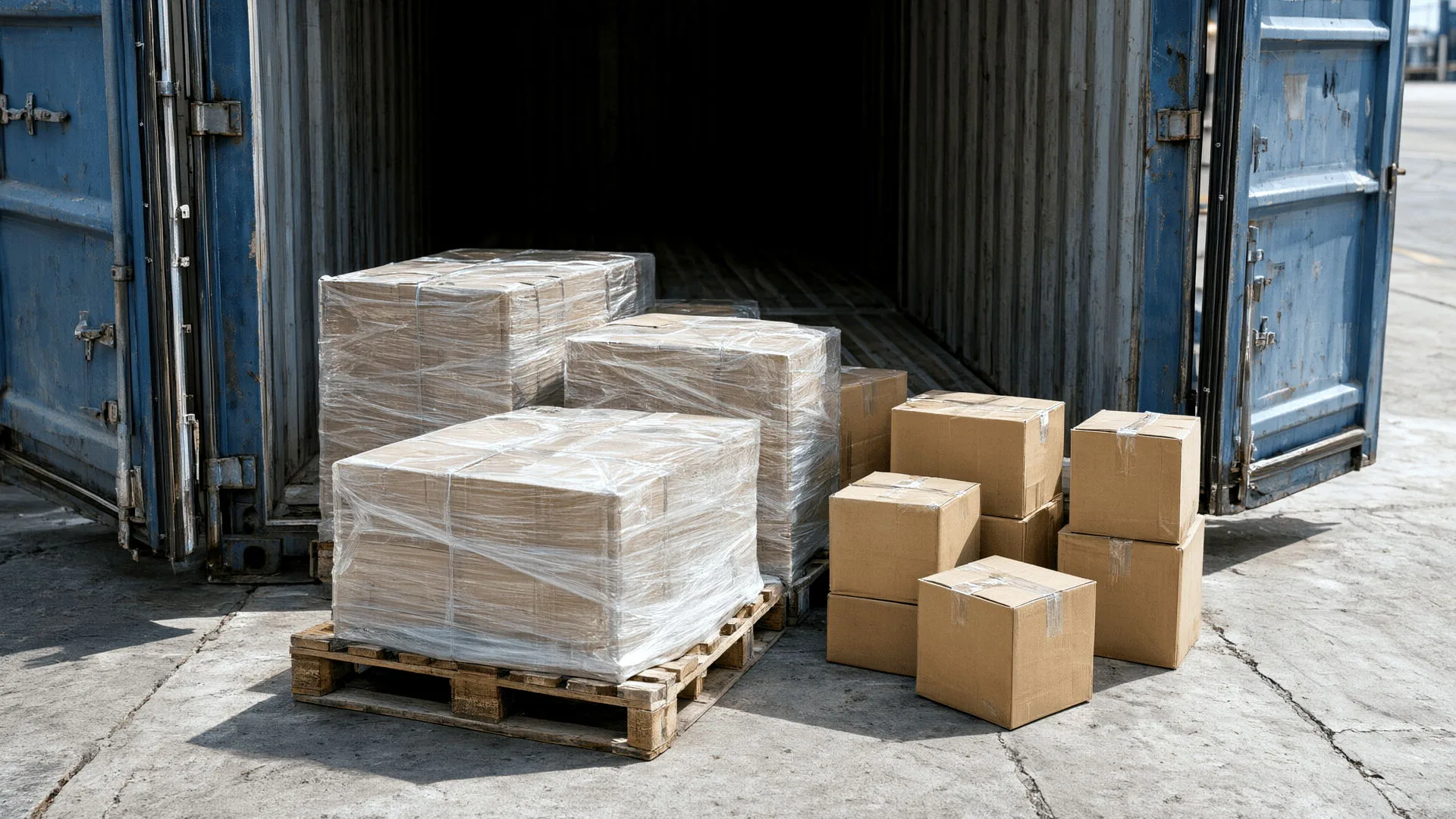
A freight quote is not a price. It is a statement about who does what, and where the money is spent. Two quotes for the same shipment can differ by 40% and both be honest — one simply stops at the port and the other carries the cargo to a warehouse door.
The way to compare them is structural. Ask for the same eight lines from everyone, then compare line by line. Missing lines are the signal, not the total.
What should a China to USA freight quote include?
Eight lines, in the order they occur along the shipment. Ask every forwarder to break the quote out this way; the ones who can do it without effort are usually the ones who priced the job rather than copied a sheet.
| # | Line | What it covers | The question to ask |
|---|---|---|---|
| 1 | Origin charges | Export declaration, terminal handling at origin, CFS receiving for LCL, supplier pickup | Is pickup included, or quoted separately per kilometre? |
| 2 | Main freight | Ocean per container or per revenue ton; air per chargeable kilo | Which sailing date, and what is the commodity? |
| 3 | Carrier surcharges | Bunker adjustment, peak season, low-sulphur, security | Fixed for this sailing, or passed through at cost? |
| 4 | Destination charges | Terminal handling, documentation, chassis, pier or rail fees | Billed at cost with the terminal tariff attached, or marked up? |
| 5 | Customs brokerage | The licensed broker’s fee for filing the entry | Separate from duty? Separate from the bond? |
| 6 | Duty and taxes | Tariff layers plus the two CBP fees | Priced from an HTS code, or a placeholder? |
| 7 | Delivery | Inland haul, appointment, liftgate, waiting time | Residential, limited access, or a dock with a bay? |
| 8 | Insurance | Cargo cover at declared value | Included, declined in writing, or absent? |
A quote that merges four of these into “all-in” is not wrong, but it cannot be compared with anything. The point of the breakdown is not transparency for its own sake: it is that each line moves for a different reason, and the ones that move most are the ones a total hides.
How do Incoterms change which lines appear?
The Incoterm decides which of the eight lines belongs on your side of the invoice. The current set is Incoterms® 2020, eleven rules in force since 1 January 2020, and the four that appear in almost every China–US quote are EXW, FOB, DAP and DDP.
| Rule | Buyer pays from | What typically appears on the buyer’s invoice |
|---|---|---|
| EXW | The supplier’s door | Everything: export clearance, origin charges, freight, duty, delivery |
| FCA | The named place in China, cleared for export | Main freight, destination charges, brokerage, duty, delivery |
| FOB | On board the vessel at the Chinese port | Main freight, destination charges, brokerage, duty, delivery |
| DAP | On arrival at the named US address, not cleared | Duty and the entry filing only |
| DDP | Nothing — the seller delivers cleared | Nothing, beyond what is inside the price |
Two practical notes that come up weekly:
- FOB is the wrong rule for containers, and the ICC says so. Under FOB the seller delivers the goods on board, which a container terminal makes awkward — the seller loses control of the box at the gate, not at the rail. FCA is the rule designed for containerised cargo, and it is the one to ask your supplier about if your quote keeps showing origin charges you thought were theirs.
- DDP is a promise, not a line item. Under DDP terms the seller carries duty and delivery, so you see fewer lines and less of the risk. Fewer lines is not the same as lower cost, and it is worth knowing what the DDP price assumes about the HTS code.
Which lines are rates and which are pass-throughs?
Freight moves; fees do not. Splitting the quote along that line tells you what can change between the quote and the invoice.
- Rate-based and volatile: main freight and bunker adjustment. These follow the market and the sailing, and a General Rate Increase can be announced between your quote and your booking.
- Rate-based and seasonal: peak season surcharges, which appear as capacity tightens and disappear again.
- Fixed per shipment: documentation, entry filing, ISF, bond and the broker’s fee. These should not change because the cargo weighed 200 kg more than expected.
- Pass-through at cost: terminal handling, chassis, drayage, exams and demurrage. A forwarder who marks these up should say so; a forwarder who bills them at cost should be able to attach the terminal tariff.
Ask two questions of every quote:
- Which of these eight lines are fixed for this shipment, and which are estimates? A quote that treats them the same way is telling you something about its care level.
- If the entry is selected for exam, who pays? The answer should be immediate and in writing. If it is “nobody knows yet”, the price is not finished.
What are destination charges at a US port, really?
This is the block that most often turns a cheap quote into an expensive invoice, because it is billed in the United States, in US dollars, by parties who never spoke to your supplier. Four components:
- Terminal handling at destination (DTHC). The terminal’s charge for receiving the container and making it available. Set by the terminal, not negotiated by your forwarder.
- Documentation and release fees. Per house bill, sometimes per container.
- Chassis and drayage. The chassis is rented by the day in most US ports; drayage is the truck move from the terminal to your door or to a rail ramp. Both are billed separately from the ocean freight.
- Port programmes. At Los Angeles and Long Beach, the Traffic Mitigation Fee (TMF) is USD 40.63 per TEU and USD 81.26 for containers larger than a TEU, effective 1 August 2026 after a 4.77% increase (WCMTOA / PierPass, July 2026). The Clean Truck Fund rate and pier or rail surcharges can appear on the same invoice.
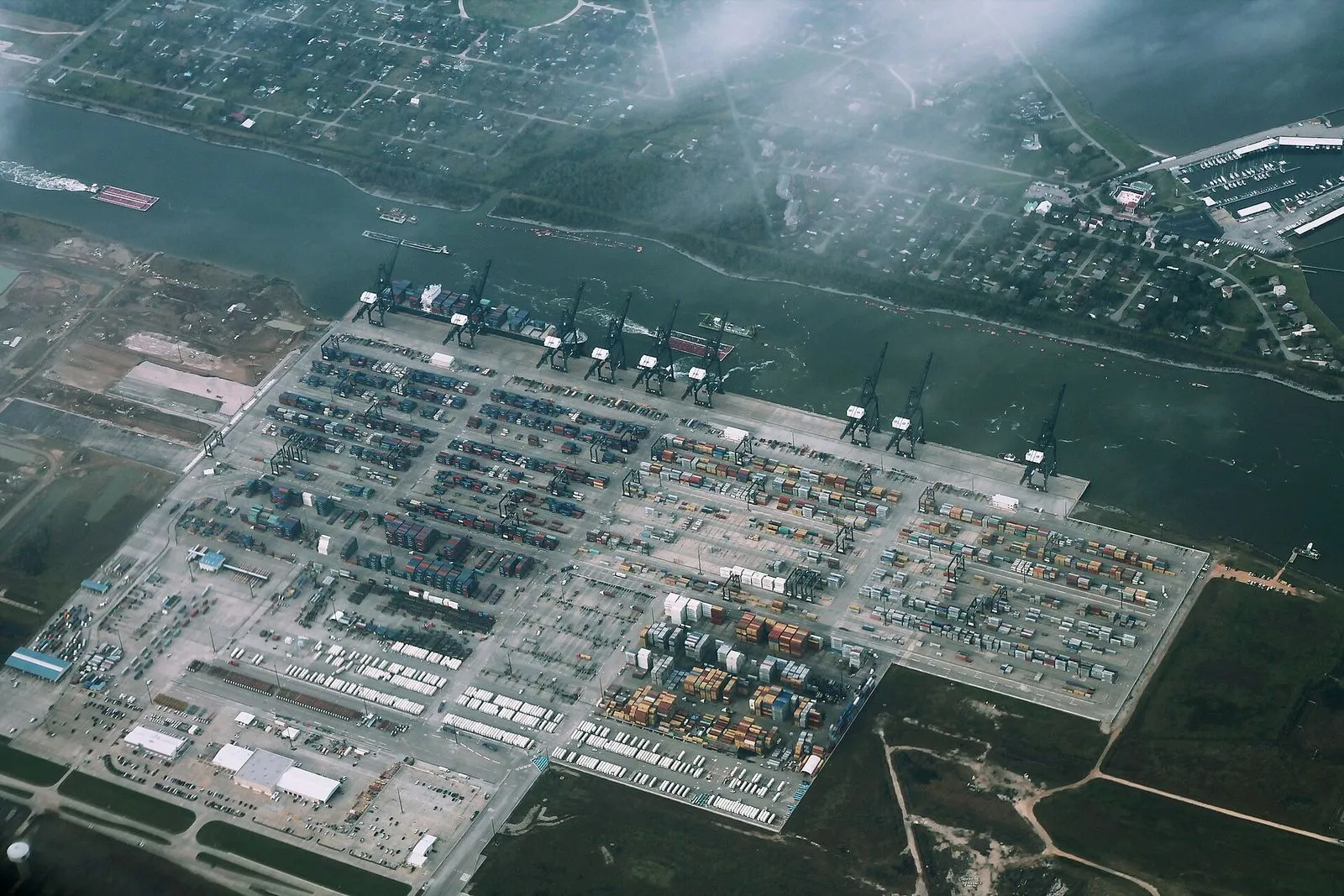
A “door-to-door” headline that excludes these is not door-to-door. It is port-to-port with a delivery estimate attached.
When is door-to-door not actually door-to-door?
Four ways the phrase gets stretched, all of which appear in real quotes:
- Rail ramp instead of door. For inland destinations the carrier sells IPI — inland point intermodal — to a rail ramp, and then a truck moves the container the last miles. If the quote stops at the ramp (ramp-to-ramp or ramp-to-door), the final trucking is a separate purchase.
- Dock instead of address. Residential, limited-access, school-zone and appointment-only addresses are priced differently from a warehouse with a loading bay. Liftgate and inside delivery are extra.
- Waiting time excluded. A delivery appointment that takes four hours to clear costs money, and the invoice for it arrives after the fact unless the quote states a free waiting window.
- Empty return excluded. On merchant haulage you are responsible for returning the empty container within free time; missing it becomes detention.
The list of what “door” means, and who arranges each leg, is set out in door-to-door shipping.
What does the exclusion list tell you?
The block that matters most is the one after the numbers: what the quote does not include. Five exclusions account for most surprise invoices:
- Detention and demurrage. Demurrage runs while the container sits in the port; detention runs while it is outside the port. Both start after free time, commonly four to seven days depending on the carrier and terminal, and both were repriced upward in 2026 — Ocean Network Express raised import demurrage at New York, Norfolk and other terminals effective 23 January 2026.
- Examinations. CBP can select any entry. The importer pays the move to a Centralized Examination Station, the exam fee and the return move; most exams land in the hundreds of dollars, and non-intrusive or intensive exams can reach four figures.
- Storage after free time. Terminal storage is charged per day per container, and it is not the same charge as demurrage.
- ISF and bond. The Importer Security Filing must be filed 24 hours before loading, with liquidated damages of up to USD 5,000 per violation for late or inaccurate filings (CBP, 10+2 rule). The customs bond is separate from the broker’s fee: a continuous bond is set at 10% of the previous twelve months’ duties, taxes and fees, with a USD 50,000 minimum for most importers (CBP).
- Reclassification risk. If an entry is audited and the HTS code moves, the difference in duty — plus interest — is the importer’s. A quote cannot absorb that; it can only state whose responsibility it is.
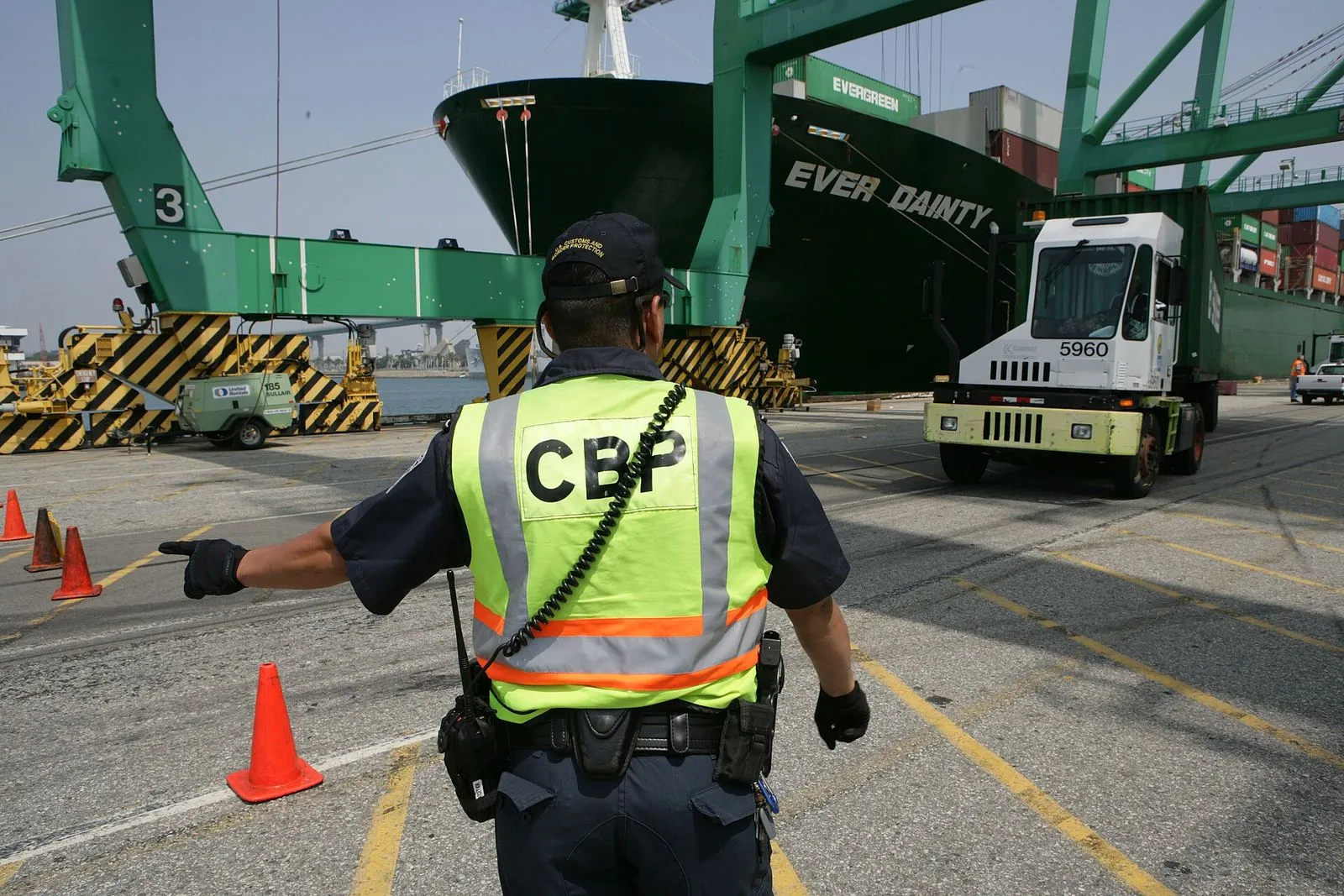
The ISF filing itself — deadlines, the ten data elements and what counts as timely — is covered in ISF 10+2 filing.
How do you compare two quotes without being fooled?
Convert both to the same scope before looking at the total. Take the cheaper quote, add the lines it left out, and re-read it against the other one. In our experience the ranking flips more often than not, and usually on destination charges and delivery.
A useful discipline is to score each quote against the same five checks:
| Check | What a complete answer looks like |
|---|---|
| Scope | Stated as port-to-port or door-to-door, with the exact door or ramp named |
| Lines | The eight lines separated, with fixed and estimate marked |
| Exclusions | Detention, demurrage, exams, storage and reclassification all addressed |
| Validity | A date, and the sailing or contract period it applies to |
| Responsibility | Who pre-authorises an exam move, who pays it, and how fast |
Then check the two things a spreadsheet cannot show: whether the transit time is port-to-port or door-to-door, and whether the rate has a validity date. A rate without a validity date is a rate that can change between booking and sailing.
For the full breakdown of what each line should contain, including the surcharges that are commonly buried, see how we build a China to USA cost figure.
Where does the duty layer come from?
Duty is the line buyers ask about last and should ask about first. In 2026 a single entry can carry a most-favoured-nation rate, one or more Section 301 layers (including the 12.5% forced-labor layer), a Section 232 duty where the product qualifies, and — for some products — an antidumping or countervailing order. The order in which they stack, and the effective dates attached to each, are set out in the 2026 duty stack.
One test separates a current quote from a stale one. The IEEPA tariffs were struck down by the Supreme Court on 20 February 2026 and collection ceased on 24 February 2026, so a 2026 quote that still carries an IEEPA line was assembled from an old rate sheet. The same applies in reverse to the Section 122 surcharge, which expired on 24 July 2026: a quote dated inside that window may carry a line that no longer applies.
Duty is not the only charge on the entry. Two CBP fees ride alongside it, and they are frequently mistaken for duty because they appear in the same block:
- Merchandise processing fee (MPF): 0.3464% of entered value, with a minimum of USD 34.58 and a maximum of USD 670.86 per entry for fiscal year 2027, effective 1 October 2026.
- Harbour maintenance fee (HMF): 0.125% of value on ocean cargo only (CBP Dec. 26-14, 91 FR 48398).
Two practical consequences for a quote:
- A broker cannot price duty from a product description. It needs an HTS classification, and the classification is the importer’s responsibility even when the broker files it.
- Duty paid in advance of entry is still an estimate. The final figure is the one on the entry summary, and a quote that shows duty as a single round number is showing a placeholder.
To model the duty side of a quote before you ask for it, the landed cost calculator applies the current tariff layers and the two CBP fees to a declared value.
What should you ask before you sign the quote?
Ask for the quote in writing with the eight lines separated, the exclusions stated, the validity date and the transit definition. Then ask six questions, in this order:
- Which of these lines are fixed and which are estimates?
- What does the transit time measure — port-to-port or door-to-door?
- Is the destination block billed at cost with the terminal tariff, or marked up?
- If the entry is examined, who pays, and who authorises the move?
- What is the free time for detention and demurrage, and who monitors it?
- Which line is most likely to change on this shipment, and by how much?
A forwarder who answers the sixth without hesitating has priced the job rather than copied a rate sheet. The answer you want is specific — “the destination chassis if the terminal runs short, by a few hundred dollars” — not “rates can change”.
Published Oct 23, 2026 · updated Oct 23, 2026. Rules, rates and dates change: confirm the current position against CBP, the HTSUS and the Federal Register before relying on any figure for a shipment. Nothing here is legal or customs advice.