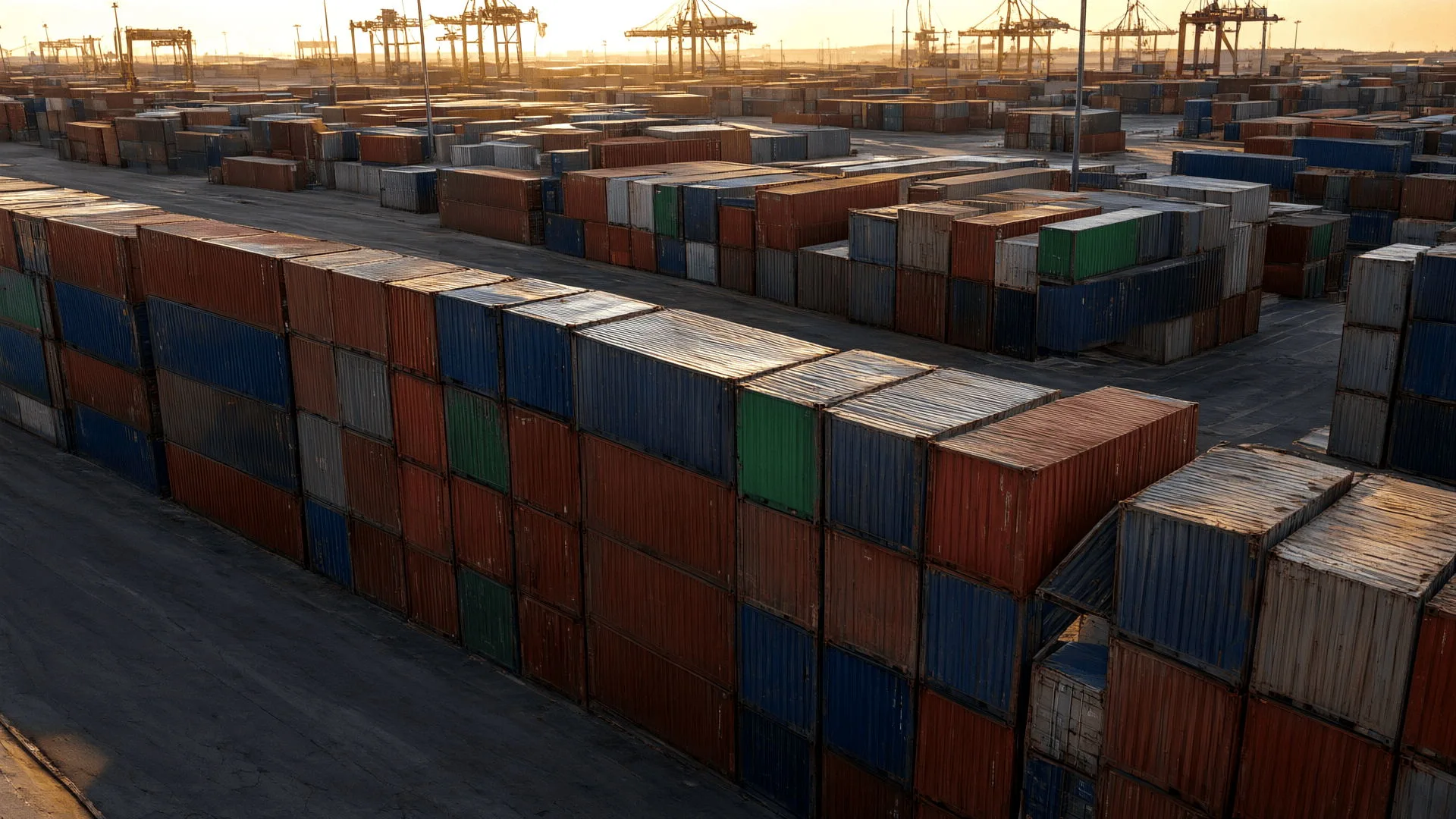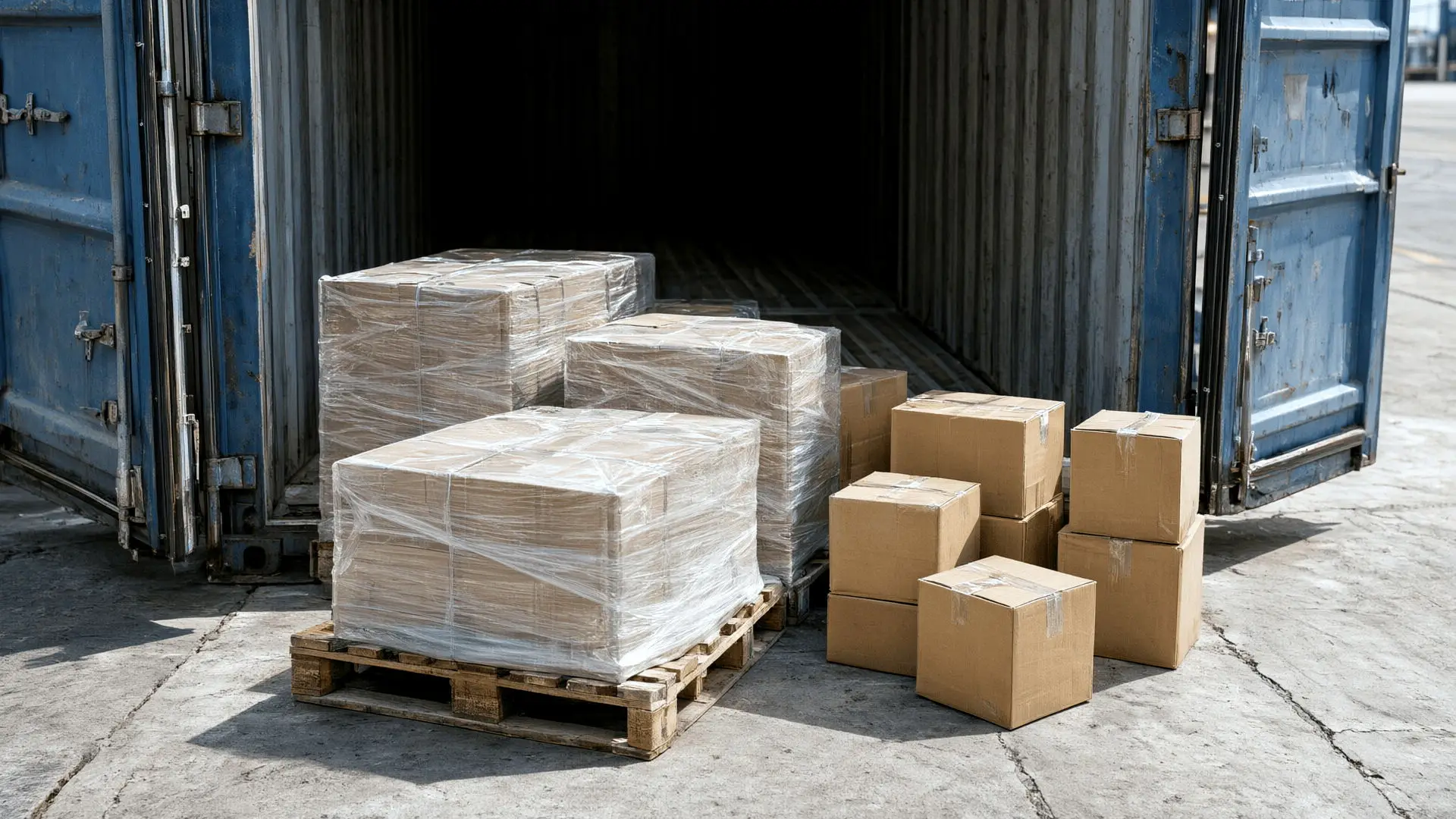
The standard advice is that LCL wins below about 15 cubic metres and FCL wins above it. The number is a reasonable starting point and a bad stopping point. It is not a rule the industry agreed on — it is one sum, run with one set of inputs, and published advice varies from 12 to 20 CBM depending on the lane and the week.
The reason is that the two modes are not priced on the same unit. One is priced per container, the other per revenue ton. Once you write both in the same currency you can see exactly which input is doing the work, and which of the four risks you are quietly buying.
How is LCL freight actually calculated?
LCL is billed on the revenue ton (also written W/M): the carrier charges on max(volume in CBM, weight in tonnes), with one cubic metre considered equal to 1,000 kg. Most consolidators also apply a minimum of one
revenue ton per shipment, some apply two, and a documentation fee is charged per house bill regardless of size.
So the invoice is never “rate × CBM”. It is rate × revenue tons, plus a fixed block that does not shrink with your cargo. Published third-party rate surveys put base LCL ocean freight from China at roughly USD 45–160 per CBM to the US West Coast and USD 65–180 to the East Coast (rate surveys, early 2026 — the spread inside one lane is larger than the spread between lanes), with container freight station (CFS) handling commonly billed at USD 15–40 per CBM at both origin and destination. Treat all three as ranges to check, not as prices: every one of them moves by sailing.
Three consignments show how the billing unit changes the answer:
| Consignment | Volume | Gross weight | Revenue tons billed | What it means |
|---|---|---|---|---|
| 120 cartons, 60 × 40 × 40 cm, light goods | 11.52 CBM | 1,850 kg | 11.52 | Volume decides; weight is irrelevant |
| 40 crates of machine parts | 6.40 CBM | 6,400 kg | 6.40 | Right at parity: 1 CBM = 1 tonne |
| 8 pallets of tiles | 8.00 CBM | 12,000 kg | 12.00 | Weight decides: billed 50% above the volume |
That last row is the one buyers miss. A cubic metre of dense cargo is not expensive because tiles are heavy; it is expensive because the carrier’s ruler switches from volume to weight the moment density passes 1,000 kg per CBM.
To run the same calculation on your own cartons, the chargeable weight calculator applies the revenue-ton rule the carriers use, including the 1:1,000 conversion.
How many CBM does a 20ft or 40ft container really hold?
Nominal capacity and usable capacity are different numbers, and quoting advice usually uses the wrong one. Nominal is internal volume. Usable is what survives carton dimensions, pallet footprints, dunnage and the door opening — cartons do not tessellate, and a pallet that is 1.2 m wide wastes the last 0.15 m of a 2.35 m floor every time.
| Container | Internal volume | Practical loading | Typical payload | Where it goes wrong |
|---|---|---|---|---|
| 20GP | ≈33 CBM | 25–28 CBM | ≈28,000 kg | Weight-limited before volume for dense cargo |
| 40GP | ≈67 CBM | 55–58 CBM | ≈26,500 kg | Same footprint as a 40HQ, 30 cm less height |
| 40HQ | ≈76 CBM | 62–68 CBM | ≈26,500 kg | The default for light, bulky goods |
| 45HQ | ≈86 CBM | 72–78 CBM | ≈26,000 kg | Not accepted on every lane |
Figures are internal dimensions to ISO 668 and payloads published by carriers; the usable column is what loading supervisors plan with, not a specification. Two consequences matter for the break-even:
- A 40HQ holds roughly 2.4× a 20GP but does not cost 2.4× as much to move. Above 25 CBM the 40HQ is usually the cheapest space per cubic metre on the lane, which is why the break-even against LCL keeps moving up as the container size grows.
- The weight limit arrives before the volume limit for anything above about 1,000 kg per CBM. A 20GP at 28 CBM of 1,000 kg/CBM cargo is at its payload ceiling; the same cargo in a 40HQ runs out of weight at roughly 26 CBM, leaving 40 CBM of paid-for air.
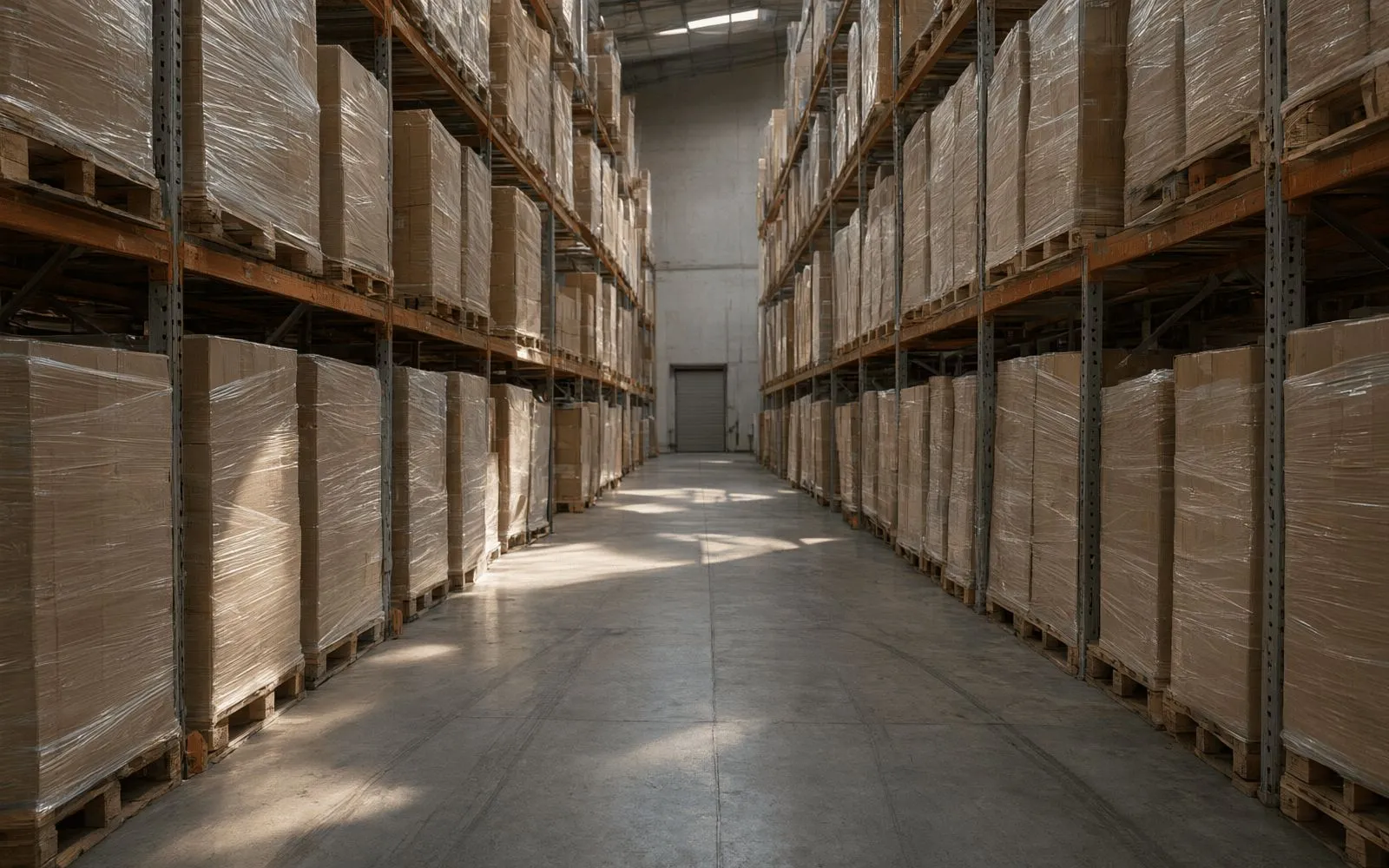
Where does the FCL vs LCL break-even sit?
The break-even is one division, and it is worth writing down because it makes the argument auditable:
Break-even CBM = all-in cost of the container ÷ delivered LCL cost per CBM
“All-in” means origin charges, ocean freight, surcharges and destination charges to the same point. “Delivered LCL cost per CBM” means the LCL rate plus both CFS charges, the documentation fee and any minimum charge — not the headline rate. Comparing a container rate to an LCL rate is the single most common way to get this decision wrong.
Run that division across the range the market actually prints, and the “15 CBM” rule appears as the middle of a grid rather than a fact:
| All-in 20GP cost | @ USD 120/CBM | @ USD 160/CBM | @ USD 200/CBM | @ USD 240/CBM |
|---|---|---|---|---|
| USD 2,500 | 21 CBM | 16 CBM | 13 CBM | 10 CBM |
| USD 3,000 | 25 CBM | 19 CBM | 15 CBM | 13 CBM |
| USD 3,500 | 29 CBM | 22 CBM | 18 CBM | 15 CBM |
| USD 4,000 | 33 CBM | 25 CBM | 20 CBM | 17 CBM |
Read the grid, not the middle cell. Cheap container freight moves the line up; expensive delivered LCL moves it down; and where the line lands above 28 CBM the comparison is no longer against a 20GP at all, because the cargo will not fit in one.
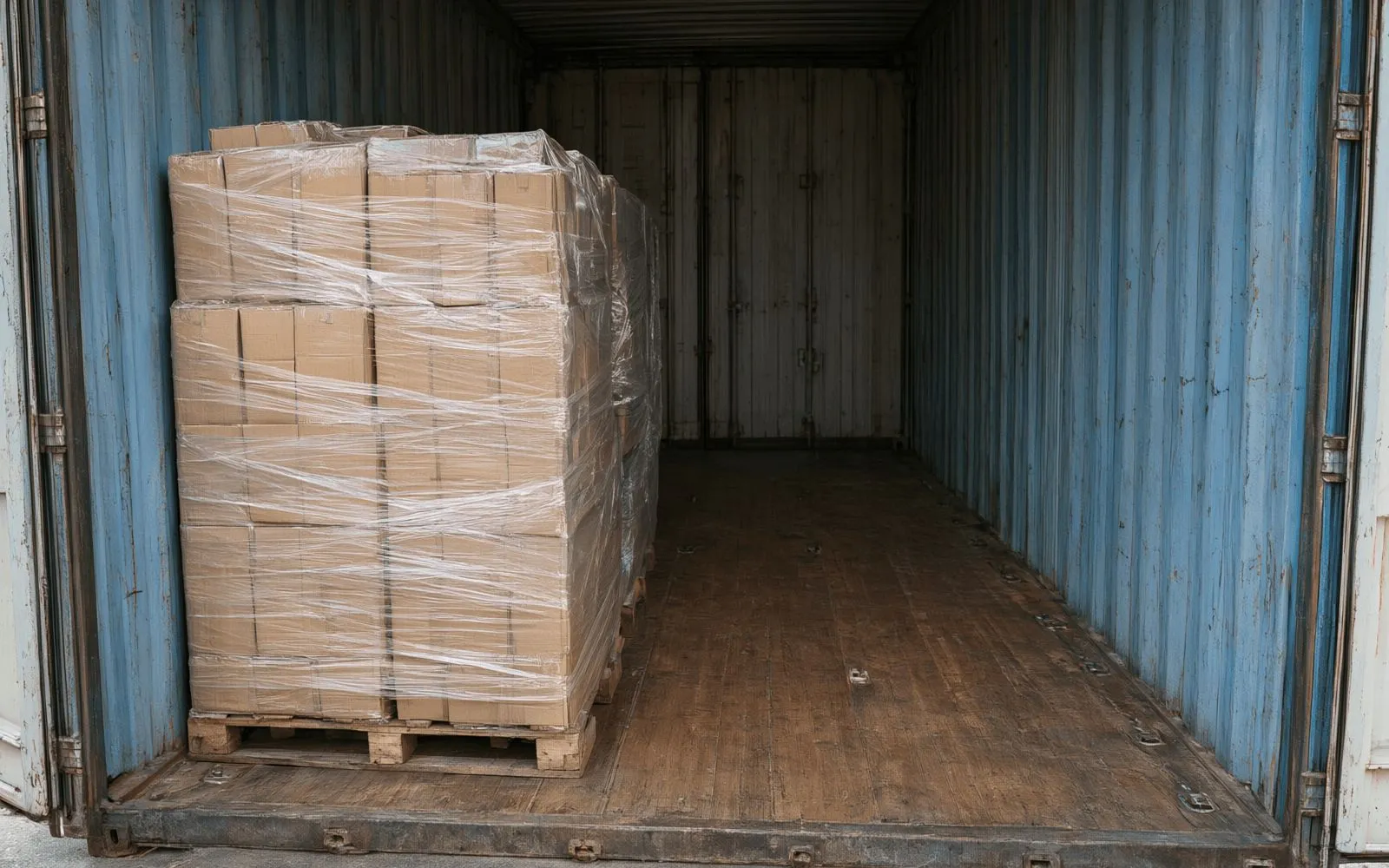
For the line-by-line definition of what each mode covers, see how we build a China to USA cost figure — it separates the four cost blocks that the two modes price differently.
Why does the break-even move between 12 and 20 CBM?
Four inputs move it, and only one of them is your cargo.
The LCL rate spread. Base LCL rates from China move week to week and vary by consolidator, and the range within one lane in published surveys is roughly USD 45–160 per CBM. A forwarder quoting 160 against a competitor quoting 90 is not necessarily overcharging; they may be quoting different sailing dates, different CFS, or different inclusion sets.
Fixed charges per shipment. Documentation, minimum charge and CFS handling are charged per shipment, so they dilute as volume grows. This is why small LCL shipments look terrible per CBM and 12 CBM LCL shipments look tolerable: the fixed block has been spread over four times as much cargo.
Where the container rate stops. A port-to-port container rate excludes destination charges; a delivered rate includes drayage, chassis and delivery appointment. Comparing a delivered LCL figure against a port-to-port FCL figure flatters FCL by several hundred dollars.
Space in the season. In the weeks before Golden Week and in the pre-Chinese New Year peak, consolidators protect space for regular accounts. LCL gets rolled or repriced, and the effective cost of that is the delay, not the rate.
When does weight make LCL the more expensive choice?
Two different failure modes, often confused:
- Density. At 1,000 kg per CBM the revenue ton flips from volume to weight. Machinery, tiles, liquids and anything packed in small dense cartons bill above their volume. An 8 CBM consignment of tiles at 1,500 kg per CBM bills 12 revenue tons — you pay 50% more than the space you occupy.
- The container’s payload ceiling. Dense cargo runs out of weight long before it runs out of volume. A 20GP at 28,000 kg payload carries only about 28 CBM of 1,000 kg/CBM cargo, and a 40HQ carries about 26 CBM before hitting its own limit — the box is a third full and the invoice is for the whole box.
Neither of these makes FCL wrong. They simply mean that for dense cargo the comparison has to be run on tonnes, not on cubic metres, and that the “cheap” LCL rate is being charged on a number you did not intend to produce.
How much longer does LCL take from China to the US?
Plan on LCL adding roughly 5–10 days to the same ocean leg, because the container waits to fill at origin and is devanned at destination before your cargo can be released. On China → US West Coast that means a port-to-port planning figure of about 20–30 days against 12–22 days for FCL; published LCL transit surveys put China → US LCL at 25–35 days door-to-door.
Add the roll risk on top, and the tail is longer than the average. If your delivery date is inside the LCL tail, the decision is not LCL versus FCL — it is FCL versus being late, and freight is rarely the expensive half of that trade.
Current lane-by-lane planning ranges, with port-to-port and door-to-door kept separate, are on China to USA shipping time.
What does the extra handling cost you in claims?
LCL cargo is loaded, sorted, co-loaded, unloaded and devanned — four more touches than a sealed container, at two terminals and two warehouses. Three things follow from that, and none of them appear on a rate sheet:
- Fragile and orientation-sensitive goods are exposed to a handling chain they were not designed for. Crates that would survive a sealed container can arrive with a broken corner from a forklift that moved them twice.
- Claims become documentary. Once cargo is co-loaded, proving where damage happened is an exercise in photographs, tally sheets and survey reports rather than an inspection of a container that only your cargo was in.
- Oversized pieces are a hard stop. LCL is priced and handled by the pallet; anything that cannot be lifted by the consolidation warehouse’s equipment needs FCL or a break-bulk quote.
Where the cargo is such that handling is the main risk, LCL and consolidation sets out what the consolidator does and does not do at each CFS.
Which four numbers decide the answer?
Before quoting either mode we ask for four numbers, because the fourth one overrides the first three:
- Total CBM — from outer carton dimensions, palletised if it ships palletised.
- Total gross weight — including pallets and packaging, not product weight.
- Longest single piece — the one that decides whether it can be handled as LCL at all.
- The date the goods must be available — in the store, on the line, or inside an Amazon appointment window.
| Volume | Light cargo, no fixed date | Heavy, fragile or date-critical |
|---|---|---|
| Under 3 CBM | LCL — fixed charges dominate, FCL is not a contest | LCL, and check the handling story first |
| 3–12 CBM | LCL | Price both; FCL often closes the gap |
| 12–18 CBM | Marginal — ask for both on the same day | FCL |
| 18–25 CBM | Marginal to FCL; the week’s rates decide | FCL |
| Above 25 CBM | FCL — a 40HQ or 40GP, whichever the cargo fills | FCL, and check the payload before booking |
For what each mode includes and excludes — origin handling, terminal charges, documentation, delivery — see sea freight (FCL) and the LCL page linked above.
Which mode for 18 CBM going to an Amazon fulfilment centre?
Eighteen CBM is the case where the arithmetic and the calendar disagree. On cost the two modes are within a few hundred dollars of each other; on delivery the difference is a week of consolidation plus the chance of a roll, against a fixed appointment window that Amazon will reschedule at your expense if the truck arrives outside it.
Two operational facts push this size towards FCL when the destination is a fulfilment centre: carton and pallet labelling has to be verified before the container is sealed (easier on your own floor than at a third-party CFS), and the delivery appointment is booked against an actual container arrival, not against a consolidator’s promised sailing. Where the shipment is a first FBA launch, that certainty is usually worth more than the LCL saving.
For the labelling, pallet and appointment requirements, see Amazon FBA shipping from China to the USA.
The mistake that costs the most
Booking LCL to save money on 18 CBM, then paying storage at destination because the consolidated container was rolled a week. The saving was real and the cost was larger. When the delivery date is fixed — a retail launch, a production line, an Amazon inbound window — the comparison should be against the cost of being late, not against the other rate. Run the division, read the grid, then ask what a week costs.
Published Oct 22, 2026 · updated Oct 23, 2026. Rules, rates and dates change: confirm the current position against CBP, the HTSUS and the Federal Register before relying on any figure for a shipment. Nothing here is legal or customs advice.